
How to Create a Strong Fashion Design Portfolio (Step-by-Step Guide)
A fashion design portfolio is more than a collection of sketches. It’s your visual résumé, your creative voice, and often the deciding factor for college admissions, internships, jobs, or freelance opportunities.
Whether you’re applying to a fashion school, preparing for advanced studies, or stepping into the industry, knowing how to structure and present your work properly makes all the difference.
This guide breaks down exactly what a strong fashion design portfolio should include, and how to build one even if you’re starting from scratch.
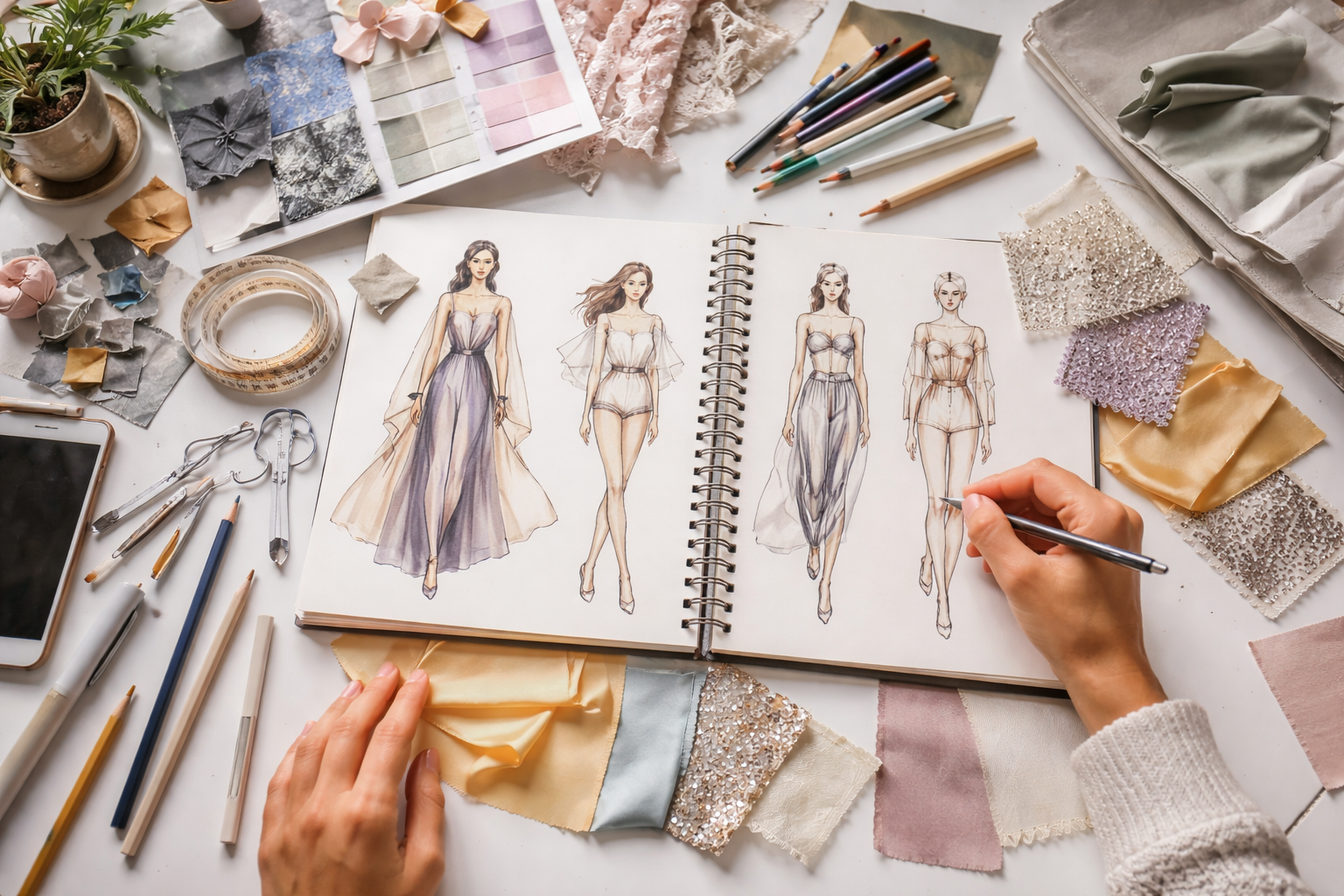
1. Understand the Purpose of Your Portfolio
Before you start designing anything, ask yourself:
Is this portfolio for college admission?
For a diploma or an advanced program?
For internships, jobs, or freelance work?
Your portfolio should always be tailored to its purpose. Admissions teams and employers are not looking for perfection; they are looking for potential, clarity of thought, and design process.
2. Start with Concept Development (Not Sketching)
One of the most common mistakes beginners make is jumping straight into outfit sketches.
Strong portfolios start with ideas, not outfits.
Include:
Mood boards (colours, textures, silhouettes, inspiration)
Concept descriptions (what inspired the collection?)
Reference images (architecture, nature, art, culture, emotions)
This shows that you can think like a designer, not just draw like one.
3. Include Design Process Pages
Fashion schools and recruiters love seeing how you think.
Your portfolio should show:
Initial rough sketches
Design evolution
Fabric exploration
Colour palette development
Print or surface design experiments
Even imperfect sketches are valuable if they show progress and intention.
4. Garment Sketches & Technical Drawings
This is where your creativity meets structure.
Include:
Final outfit illustrations (hand-drawn or digital)
Front and back views were possible.
Basic technical flats (especially for diploma or professional programs)
Clean presentation matters more than advanced software skills.
5. Add Fabric & Material Awareness
Even beginner portfolios should demonstrate a basic understanding of fabric.
You can include:
Fabric swatches (physical or photographed)
Fabric callouts (why this fabric for this design?)
Texture illustrations
Sustainable or functional material choices
This shows industry awareness beyond aesthetics.
6. Show Range, Not Quantity
A strong portfolio is focused, not overcrowded.
Ideal balance:
8–15 well-curated pages
2–4 mini collections or concepts
Variety in style, silhouette, and inspiration
Avoid repeating the same design style across every page.
7. Presentation & Layout Matter
Your portfolio should be:
Clean
Easy to follow
Visually balanced
Use:
Consistent fonts
Neutral backgrounds
Clear headings
Logical flow (concept → process → final design)
A well-designed portfolio reflects professionalism before anyone reads a single word.
8. Digital vs Physical Portfolio
Most institutions now prefer digital portfolios (PDF format).
Ensure:
High-resolution images
File size within limits
Proper naming conventions
Easy scrolling and readability
A physical portfolio may still be useful for interviews or exhibitions.
9. Common Portfolio Mistakes to Avoid
Too many finished designs, no process
Copying Pinterest looks without originality.
Overuse of filters and effects
Ignoring fabric logic
Messy layouts and inconsistent spacing
Remember: clarity beats complexity.
How We Support Students with Portfolio Preparation
Creating a portfolio can feel overwhelming, especially if you’re unsure what admissions teams actually expect.
That’s why we offer:
A focused Portfolio Preparation Program for students who already have an interest or basic skills but need structure, guidance, and feedback
Short-term courses designed specifically for fashion school applications
Full-fledged Diploma Programs that build portfolios organically as part of the learning process, not as an afterthought
Students in our diploma programs graduate with industry-ready portfolios, developed step-by-step through concept development, garment construction, and design thinking.
Final Thought
A fashion portfolio is not about being “perfect.”
It’s about showing who you are as a designer, how you think, and how you translate ideas into form.
With the right guidance, structure, and feedback, any student can build a strong, confident portfolio no matter where they start.
If you’re unsure which path suits you best, portfolio prep or a full diploma, start with clarity. The designs will follow.