
Interior Design in Vancouver’s High-Value Housing Market
Why Smart Space Design Is Becoming a Strategic Skill
Vancouver has long been defined by its landscape. Mountains, ocean, glass towers, and tree-lined residential streets create one of the most visually distinctive urban environments in Canada. Yet beneath this beauty lies one of the most complex housing markets in the country.
Limited land availability, high property values, increasing density, and evolving lifestyle expectations have fundamentally changed the way homes are designed. In Vancouver, interior design is no longer a decorative enhancement. It is a spatial strategy.
When square footage costs what it does in this city, design becomes economic logic.
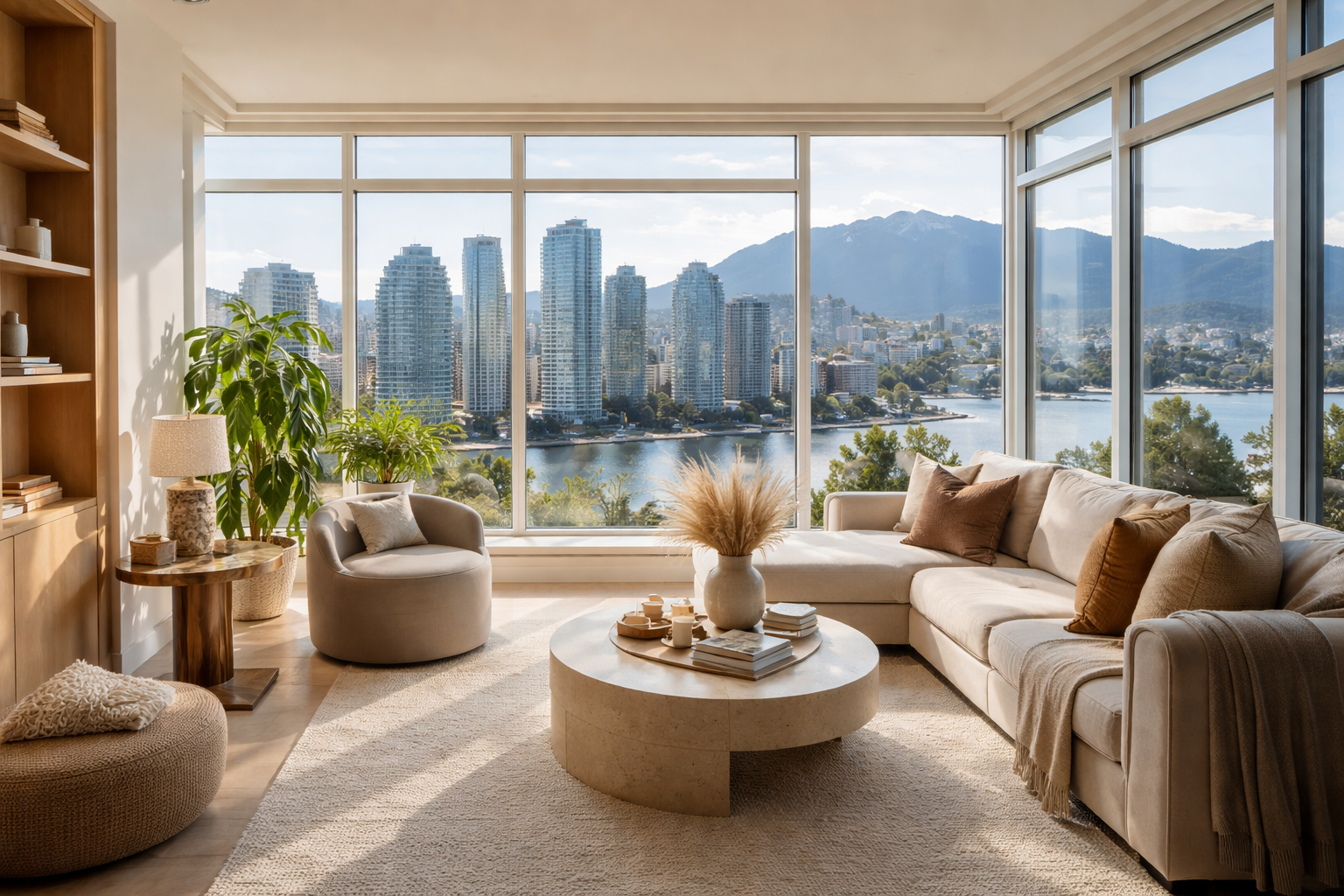
The Reality of Space in Vancouver Homes
Over the past decade, condominium living has become the norm for many residents. Compact one-bedroom units, micro-suites, and multi-use living areas have replaced traditional large family homes for a significant portion of the population.
This shift has forced design to evolve.
A living room is often an office.
A dining table becomes a workspace.
A bedroom may double as a content studio, guest room, or storage solution.
Interior designers working in Vancouver must think differently. The question is no longer “How do we decorate this space?” The question becomes “How do we engineer this space to work harder?”
We see increased demand for custom millwork, built-in storage walls, concealed cabinetry, convertible furniture, and light-enhancing palettes that visually expand rooms. Scandinavian influences blend with West Coast modern sensibilities. Natural wood tones soften high-rise living. Plants and organic textures reconnect residents with nature despite urban density.
The aesthetic may appear minimal. The planning behind it is not.
Interior Design as Investment Strategy
In Vancouver’s competitive market, design influences value.
A thoughtfully designed interior photographs better in listings.
A staged condo can generate a stronger emotional response from buyers.
A well-planned renovation can significantly increase resale potential.
A rental unit with elevated finishes can command higher monthly income.
Interior design intersects directly with real estate economics.
Developers understand this. Realtors understand this. Increasingly, homeowners do too.
This growing awareness has shifted interior design from a hobby to a profession in the eyes of the market. Clients now expect designers to understand building codes, construction limitations, material durability, budget optimization, and sustainability requirements.
Design decisions must be beautiful, functional, and financially sound.
Sustainability and Wellness in the West Coast Context
Vancouver’s identity is deeply connected to environmental awareness. Green building practices, sustainable materials, and wellness-focused spaces are no longer niche trends.
They are expectations.
Natural light optimization, low-VOC finishes, responsibly sourced wood, and energy-efficient layouts are shaping project briefs. Interior designers are being asked to consider air quality, mental well-being, and long-term environmental impact alongside aesthetic harmony.
In a city surrounded by nature, interiors are expected to reflect that relationship.
Design is becoming a conversation about health, longevity, and responsible living.
The Skills Required in Today’s Interior Design Landscape
The modern interior designer in Vancouver must balance creativity with technical fluency.
They must understand spatial planning principles.
They must read floor plans accurately.
They must work within municipal regulations.
They must communicate effectively with contractors and clients.
They must present cohesive concepts through professional portfolios.
This complexity is why formal education has become increasingly important for aspiring designers who want to compete in serious markets.
The Interior Design Diploma at The Cut Fashion Design Academy responds directly to this reality. Students are trained not only to develop aesthetic sensibility, but to think structurally. The curriculum emphasizes drafting, colour theory, material selection, software proficiency, and client-focused project development.
In a city where interior design decisions carry financial weight, graduates need both creative confidence and technical discipline.
The program encourages students to build portfolios rooted in real-world applications. Vancouver is not a hypothetical design environment. It is the context in which students will eventually work.
Designing for the Future of Urban Living
As Vancouver continues to densify and evolve, the role of interior design will expand rather than diminish.
Smaller homes demand smarter solutions.
Higher property values demand strategic planning.
Changing lifestyles demand flexible environments.
Interior design sits at the intersection of creativity, architecture, psychology, and economics.
For those drawn to visual storytelling, space planning, and the transformation of everyday environments, the field offers both artistic fulfillment and professional relevance.
In Vancouver, interior design is not surface-level styling. It is an urban adaptation.
And as the housing market continues to shape how we live, interior designers will remain central to shaping how we experience our homes.