
What Are the Qualifications for a Fashion Designer?
Your Complete Guide to Skill, Education & Industry Requirements by The Cut Design Academy
Fashion design isn’t just about creativity; it’s a blend of technical skill, artistic understanding, and industry knowledge. Whether you dream of launching your own brand, joining a design house, or working in apparel production, understanding the qualifications required to become a fashion designer is the first step toward entering this dynamic industry.
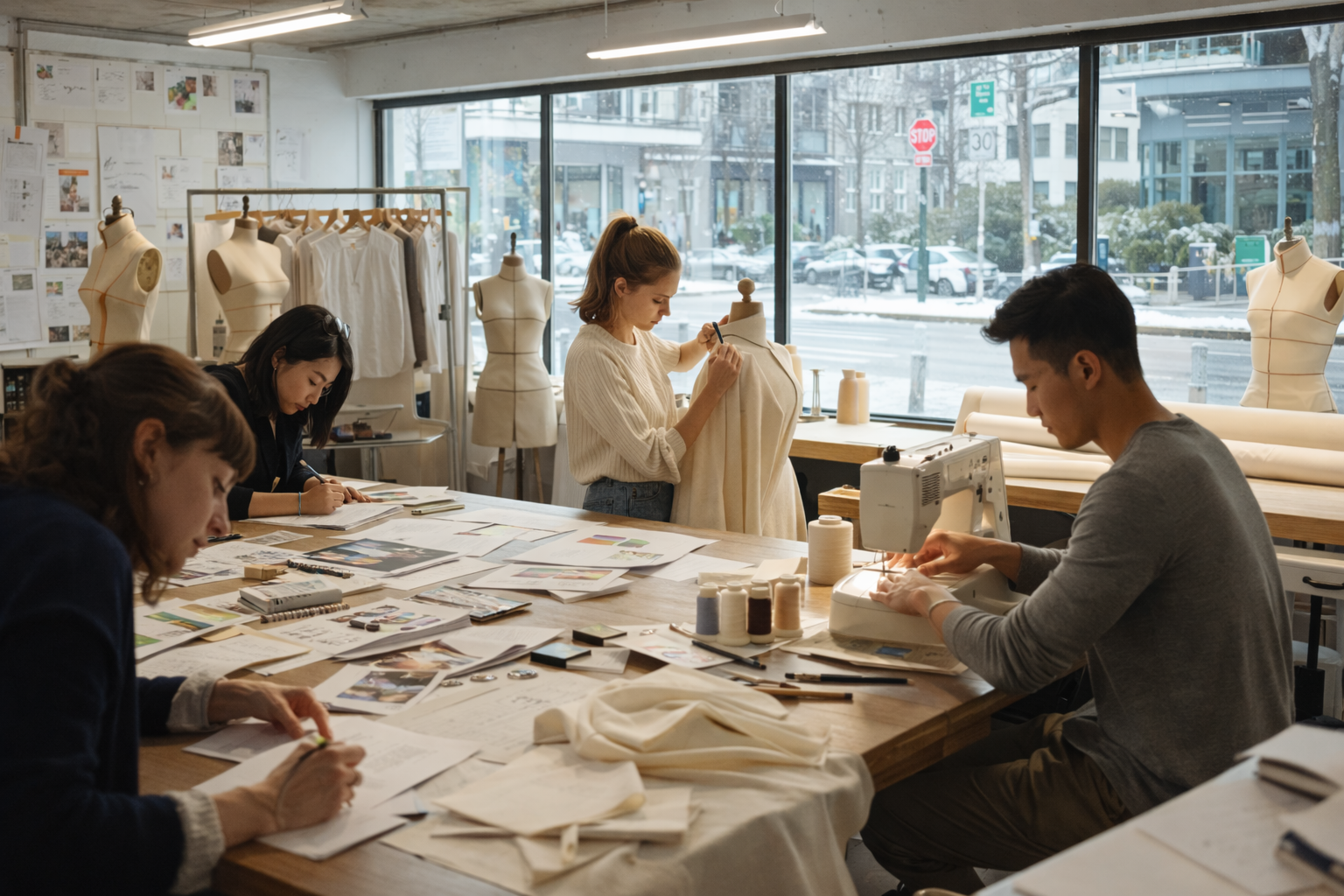
At The Cut Design Academy, we train designers who work in real studios, real workshops, and real production environments. Here’s an in-depth look at the qualifications that genuinely matter.
1. Formal Education (Required? Helpful? Recommended?)
Is a degree mandatory to become a fashion designer?
Short answer: No.
But formal education gives you a massive advantage.
What type of education helps most?
✔ Fashion Design Certificate or Diploma
These programs teach core skills like pattern drafting, draping, garment construction, textile selection, and collection development. A well-structured diploma helps students graduate portfolio-ready.
✔ Specialized Programs
Many aspiring designers take short courses in:
Pattern making
Sewing
Fashion sketching
Technology (CLO 3D, Illustrator, Photoshop)
Creative direction
✔ Bachelor’s in Fashion Design or Fashion Technology
Helpful if you want to work in major design houses or corporate apparel companies. Not required for boutique brands or independent designers.
Industry reality:
Most hiring managers care more about skill and portfolio than degrees. Designers with strong technical skills and a compelling portfolio get hired faster than those with theoretical degrees but weak practical ability.
2. Essential Technical Skills (Non-Negotiable)
Fashion is an applied craft. Designers must understand how ideas come to life.
A. Pattern Making
This is the backbone of fashion design. Knowing how to draft patterns, manipulate blocks, and convert sketches into real garments is one of the strongest qualifications you can have.
B. Sewing & Garment Construction
From seam techniques to hems, closures, and finishing, understanding construction makes you a more confident designer.
C. Draping
Working directly on a dress form helps designers explore silhouette, volume, and fit in a hands-on way.
D. Fabric Knowledge
Knowing how denim behaves vs chiffon vs wool matters. The wrong fabric choice can destroy a design.
E. Technical Drawings (Flats)
Industry-standard flat sketches are essential for communicating with pattern makers, factories, and garment technicians.
F. Illustration & Concept Sketching
Even in the digital age, hand sketching helps designers develop ideas quickly.
These skills are the core of what The Cut teaches: practical, industry-ready, hands-on training.
3. Digital Competencies (The Modern Designer’s Advantage)
Fashion today requires comfort with digital tools. These skills make designers more employable:
✔ Adobe Illustrator (essential for flats)
✔ Photoshop (editing, moodboards, concept exploration)
✔ CLO 3D / Browzwear (3D garment simulation)
✔ CAD software
✔ Digital pattern-making tools
Students who understand both physical construction and digital workflows tend to get hired faster.
4. A Professional Portfolio (The #1 Hiring Requirement)
Your portfolio, not your degree, is the qualification employers look at first.
A strong portfolio demonstrates:
Your design process
Moodboards + research
Concept development
Technical flats
Final garments worn or fit-tested
Shooting/presentation quality
Consistency of vision
Craftsmanship
At The Cut, every program is built around helping students graduate with a polished, industry-ready portfolio that reflects their technical and creative strengths.
5. Industry Experience (Even Small Experience Counts)
Many designers start with:
Internships
Assistant roles
Freelance work
Alterations shops
Studio volunteering
Theatre costume work
Any hands-on experience that exposes you to real garments, clients, and deadlines is a qualification in itself.
6. Key Soft Skills Fashion Designers Need
A. Creativity & Curiosity
Design begins with exploration. Curiosity keeps ideas fresh.
B. Problem-Solving
Fit issues, fabric constraints, production timelines, and real-world design pose many challenges.
C. Attention to Detail
A designer’s eye must notice proportion, line, texture, and construction quality.
D. Communication Skills
Designers work with pattern makers, sewers, photographers, models, fabric reps, and clients.
E. Time Management
Collections run on tight deadlines. Being organized is a significant asset.
These soft skills are often overlooked, but they separate “stylists” from true designers.
7. Understanding the Fashion Business (A Must for Aspiring Entrepreneurs)
Designers today often wear multiple hats, especially when building independent brands.
Basic business skills that help:
Pricing & costing
Selecting manufacturers
Understanding materials & sourcing
Retail vs wholesale
Branding & positioning
Market research
Client relationships
Sustainability practices
Design is only half the job; the business side is equally important.
8. Do You Need Certification to Become a Fashion Designer?
Not officially, fashion is not a regulated profession.
But certifications add credibility, especially in technical areas such as patternmaking or sewing.
Accreditations from respected institutions (like The Cut’s programs) help your resume stand out.
9. The Real Qualification: A Designer’s Vision + Skill
Ultimately, fashion design is a combination of:
✔ Creativity
✔ Technical mastery
✔ Strong portfolio
✔ Understanding fabrics & construction
✔ The ability to bring ideas to life
These qualifications matter more than titles.
10. How The Cut Design Academy Helps You Qualify as a Fashion Designer
At The Cut, our programs focus on hands-on training, small class environments, and direct guidance from industry professionals. Students learn:
Pattern drafting from scratch
Garment construction
Sewing techniques
Creative draping
Illustration & design development
Moodboarding & concept building
Portfolio creation
Real-world studio workflow
Our graduates walk into the industry with confidence, skill, and a strong design identity.
Final Thoughts
If you’ve been wondering, “What are the qualifications for a fashion designer?” the answer is a blend of skill, education, practice, and artistic clarity. Fashion is one of the few careers where your work speaks louder than any degree.
With the proper training and a strong portfolio, anyone with passion and commitment can become a designer.
And if you’re considering a future in fashion, The Cut Design Academy is here to guide you every step of the way.