
Why Maximalism Is Taking Over Canadian Homes in 2026
For the better part of a decade, the dominant message in interior design was simple: less is more. White walls. Bare surfaces. Furniture so spare it looked like nobody actually lived there. Minimalism was not just a style, it became a moral position. A clean home meant a clear mind. Owning less meant being more evolved. The less you had, the more intentional you were.
That era is over.
In 2026, the conversation has shifted in a direction that is both more interesting and more human. Maximalism is not just trending. It is taking over, and the designers, homeowners, and students paying attention to why this is happening will be far better equipped to work in the industry that is emerging from this shift.
What Maximalism Actually Means in 2026
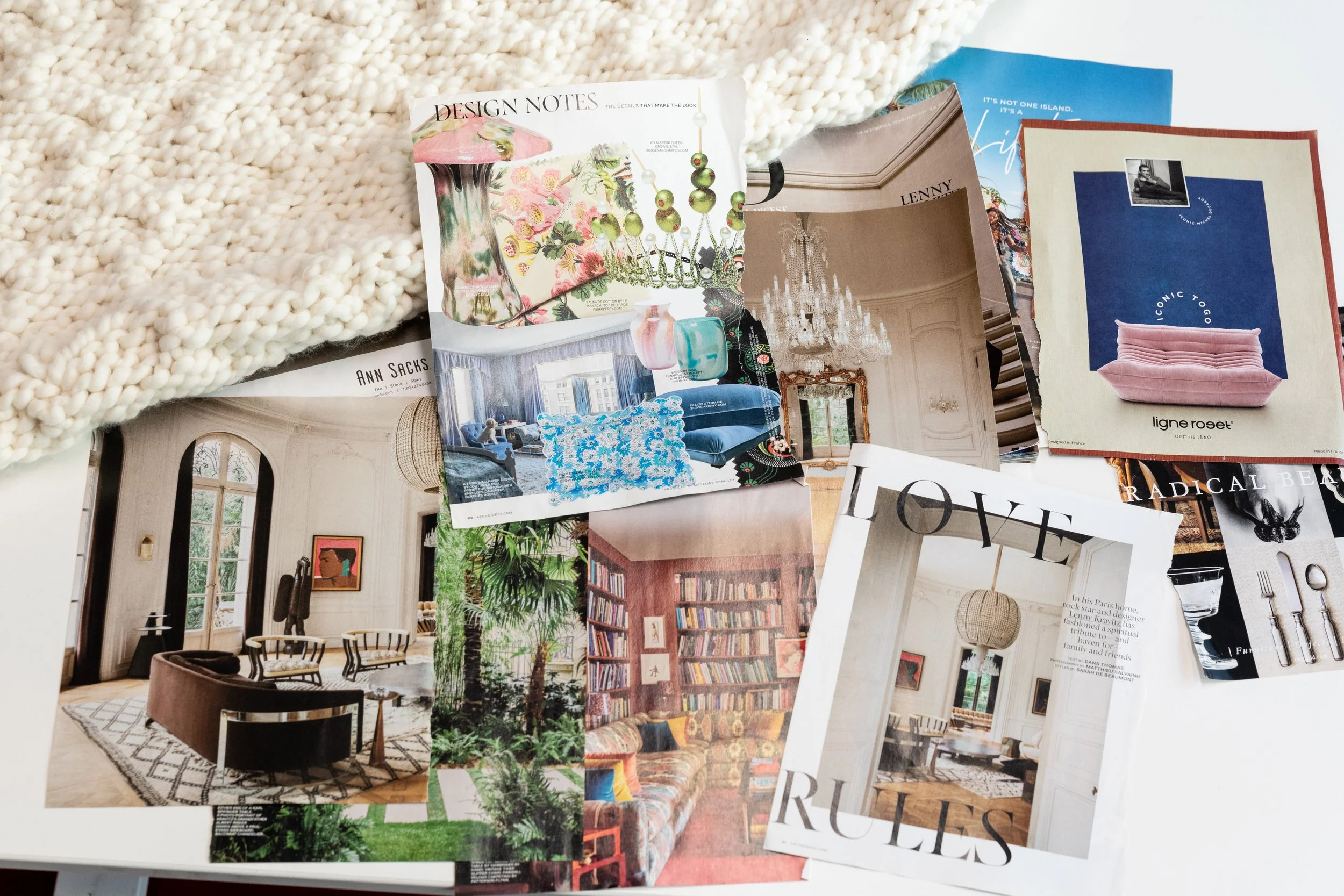
Here is the first thing to understand: the maximalism of 2026 is not what most people picture when they hear the word. It is not chaotic. It is not cluttered. It is not every surface covered in mismatched objects with nowhere for the eye to rest.
Sophie Salata, head of brand at Vinterior, describes it as a clear shift toward interiors that feel lived-in, not just looked-at. Homes that are layered, tactile, and intentionally personal. Rich textures, velvet, wool, leather alongside vintage floor lamps, gleaming brass, and mid-century silhouettes, all adding soul to the corners of a room.
The operative word in every serious designer's description of 2026 maximalism is intentional. Designer Kathy Kuo calls it a kind of maximalism that layers collected, personal objects throughout a home, the kinds of nostalgic pieces slowly picked up on travels or passed down from family members over time that tell the story of the people who live there.
That is the distinction that matters most for design students to internalise. The difference between maximalism and clutter is not the number of objects in a room. It is whether those objects were chosen with purpose, whether they relate to each other, and whether they serve the story the space is trying to tell.
Why Canada Specifically Is Embracing This
The maximalism shift is happening globally, but it is landing in Canada with particular force, and understanding why is a useful context for any designer working in this market.
The 2026 Interior Design Show at the Metro Toronto Convention Centre set the tone clearly at the start of the year. Designers and brands showcased a return to earthy, cosy sensibility with soft muted colours, warm neutrals, deep earth tones, low-slung lounge seating with chunky proportions, curved silhouettes, and a strong emphasis on texture including woven and natural finishes. The show was not showing what was new. It was showing what Canadian homeowners had been quietly asking for.
Part of this is practical. Canadian winters are long, dark, and psychologically demanding. A stark white room with nothing in it is tolerable in October. By February it is a specific kind of misery. Maximalist interiors, with their layered textiles, warm lighting, accumulated objects, and rich colour, are fundamentally more liveable in a climate that keeps you indoors for months at a time. The design choices that feel luxurious in a magazine shoot feel genuinely necessary in a Toronto January.
There is also a cultural dimension. A generation of Canadians who grew up in homes styled for Instagram are now in their late twenties and thirties, establishing their own households, and many of them are actively rejecting the aesthetic they grew up performing. They want homes that feel like them, that reflect where they have been, what they care about, who they are. Maximalism gives them permission to do that.
The Design Skills This Requires
For interior design students, the maximalism shift is both an opportunity and a genuine challenge. It demands skills that are in some ways harder to teach than the fundamentals of minimalist composition.
Minimalism, for all its apparent simplicity, has clear rules. Grid-based layouts, negative space ratios, restricted colour palettes. It is systematic, and systems are teachable. Maximalism is more complex precisely because its rules are less visible. The goal is a room that feels abundant but not overwhelming, personal but not self-indulgent, layered but still coherent.
The designers doing this well consistently point to three skills as essential.
Colour coherence across complexity. Sarah Henry of La Manufacture Cogolin describes it this way: a successful maximalist interior layers patterns and textures, mixes pattern scales, and links everything through a common colour palette. The complexity is held together by colour, which means you need a highly developed colour sense to pull it off. Not just knowing which colours look good together in isolation, but understanding how they behave across different materials, at different scales, and in different lighting conditions.
Visual rhythm and breathing room. Henry adds that successful maximalist spaces always include moments of visual rest. A painted wall, a large piece of furniture with no pattern, something that gives the eye a place to pause before moving to the next layer. Without those moments, even the most beautiful collection of objects becomes overwhelming. Learning to feel when a room needs more and when it needs to stop is a skill that develops through practice and serious looking.
Material literacy. Designer Malbat Christin describes what draws her: aged wood marked by use, washed linen that moves with the light, handmade ceramics with imperfect glazes. The key is contrast, shiny and matte, smooth and nubby, graphic and soft. This kind of material sensibility cannot be developed from looking at screens alone. It comes from handling things, visiting spaces, and understanding how different materials age and respond to light over time.
The Philosophical Shift Underneath the Aesthetic
What makes the maximalism conversation more interesting than a typical trend cycle is what it says about the relationship between design and identity.
Minimalism, at its core, asked people to perform self-discipline through their spaces. To demonstrate that they had edited, curated, and stripped away everything non-essential. The implicit message was that the less you had, the more evolved your taste.
Maximalism asks something different. It asks people to be honest about who they actually are, what they have collected and loved, what their lives have actually accumulated. Erin Napier of HGTV's Home Town puts it plainly: a house should feel like your story. It should be full of things you will love long after the magazines have moved on.
That is a fundamentally different design philosophy. It prioritises the inhabitant over the observer. It cares more about how a space feels to live in than how it photographs. And it places a very different kind of demand on the designer, the ability to serve someone's actual life rather than an idealised version of it.
For students entering the industry now, this shift is worth understanding deeply because it changes what clients are going to ask for. They are not going to walk in with a Pinterest board of white rooms and ask you to recreate it. They are going to walk in with objects that matter to them, colours they are drawn to, references that feel personal, and ask you to make it all work together.
That is harder. It is also more interesting.
Where to Start as a Design Student
If you are studying interior design and want to develop your maximalist eye, the single most useful thing you can do is start looking at spaces that predate the minimalist era. Mid-century rooms, Victorian interiors, the great English country houses, the apartments of 1970s New York. These spaces were designed before less-is-more became the default, and they contain lessons about pattern mixing, object curation, and layered colour that are extraordinarily relevant right now.
The second thing is to practice thinking about rooms as narratives. Every object in a maximalist space should be there for a reason, whether that reason is aesthetic, sentimental, functional, or historical. When you are designing, ask what story this room is telling and whether every element is contributing to that story or just occupying space.
The third is to spend time in real maximalist spaces, not photographs of them. The way a layered room feels to be inside is completely different from the way it looks in an image, and developing the instinct for when a space has the right density requires being in spaces with that quality.
Maximalism is not the trend that replaces minimalism. It is the recognition that interior design was always supposed to be about the people who live in a space, not the people who photograph it. In 2026, Canadian homeowners have decided they agree.
The designers who understand that are going to have a very good decade.
Interested in building the skills to design intentional, layered spaces? The Cut Design Academy's Interior Design Diploma is built for the next generation of Canadian designers. Reach out to our admissions team at admissions@thecutdesignacademy.com