
Beyond the Trend: How to Find and Trust Your Unique Design Voice
Picture a studio on a misty Vancouver morning. Rain taps the windows, the mountains sit wrapped in clouds, and a fashion diploma student pins a scrap of faded green silk to her board. She picked it up from a flea market table months ago and has never been able to explain why. It doesn't match her mood board or anything her feed is showing her. She just keeps coming back to it.
That scrap of silk is where a design voice begins.
In an era of rapid trend cycles, mood board algorithms, and endless instant inspiration, every studio asks the same question, whether the work is draped fabric, a styled room, or a layout grid: How do I find my unique design voice?
At our school, we have watched hundreds of students arrive with that question and leave with an answer. Here is what we have learned about how it happens.
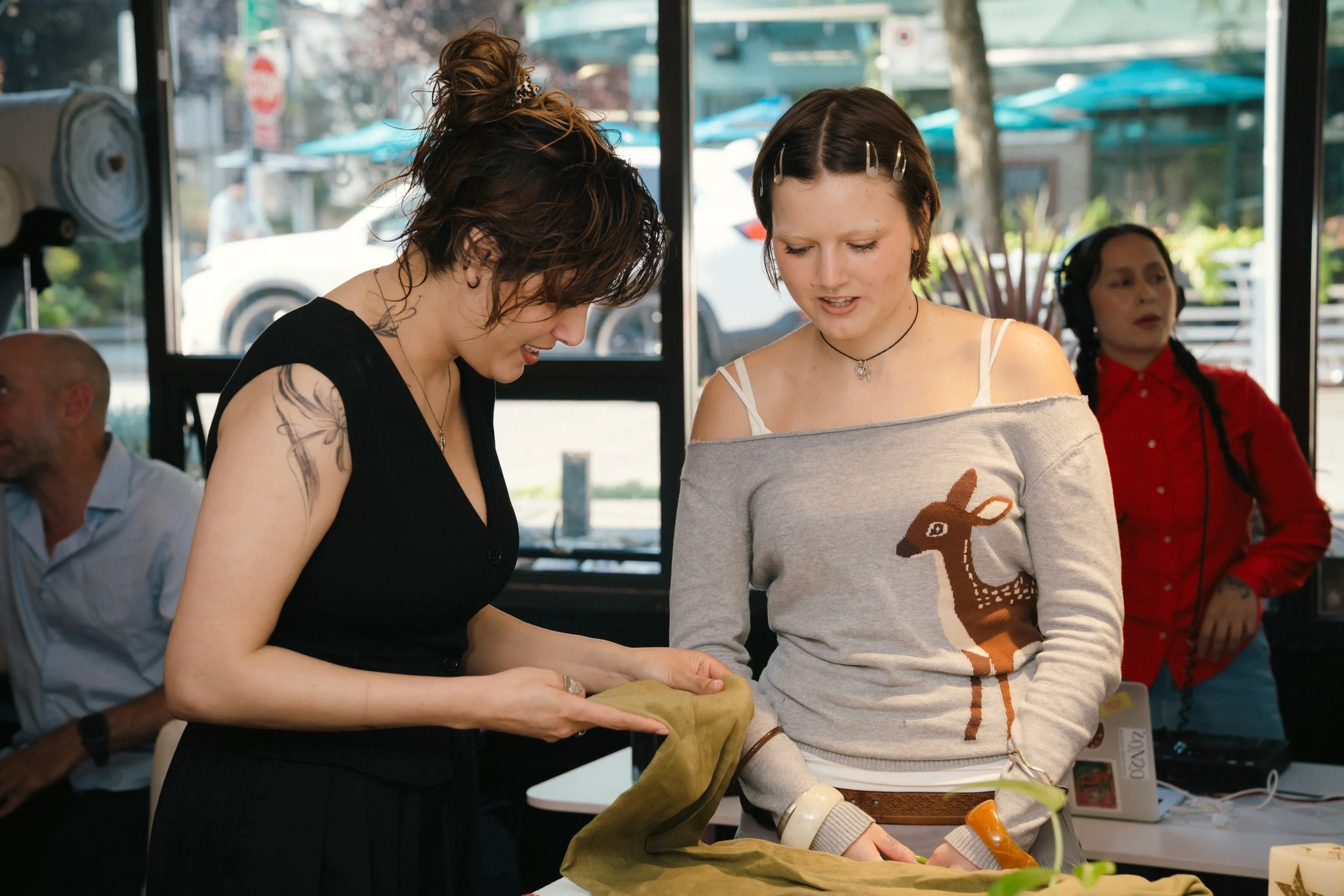
Step 1: Collect What Moves You, Not Just What Trends
Your creative voice often lives in the details you notice when no one is watching. The colour of lichen on a cedar fence. The way afternoon light moves across a wall. The hem of your grandmother's coat.
For fashion designers: Look beyond the runway. Historic textiles, unexpected colour pairings in nature, and the structural silhouettes of architecture all hold ideas that no trend report has touched.
For interior designers: Look past the pinboards. Notice tactile textures, how a room changes from dawn to dusk, and the emotional weather of a space.
For graphic designers: Look beyond the current font pairings. Study vintage print ephemera, hand-drawn lettering, the patina of old street signs, and the quiet magic of non-digital printmaking.
Try this: Build a physical, or raw digital, mood board with zero work from your peers or trend accounts. Fill it with textures, personal memories, light studies, and raw materials. Let it be entirely, wonderfully yours.
Step 2: Embrace the "Wrong" Drafts and Imperfections
Every designer we admire has a drawer, a folder, or a rack full of drafts that went somewhere unexpected. Those drafts are the road to your voice, because your signature often arrives disguised as a happy accident or a flaw you decided to keep.
In fashion: A raw edge left unfinished, an exaggerated proportion, an unconventional seam.
In interiors: A deliberate asymmetry, or a striking meeting of antique and ultra-modern pieces.
In graphic design: A broken grid, a customized letterform, an intentional layer of texture.
When something feels slightly "off" and you can't stop looking at it, pay attention. That feeling is your taste speaking up.
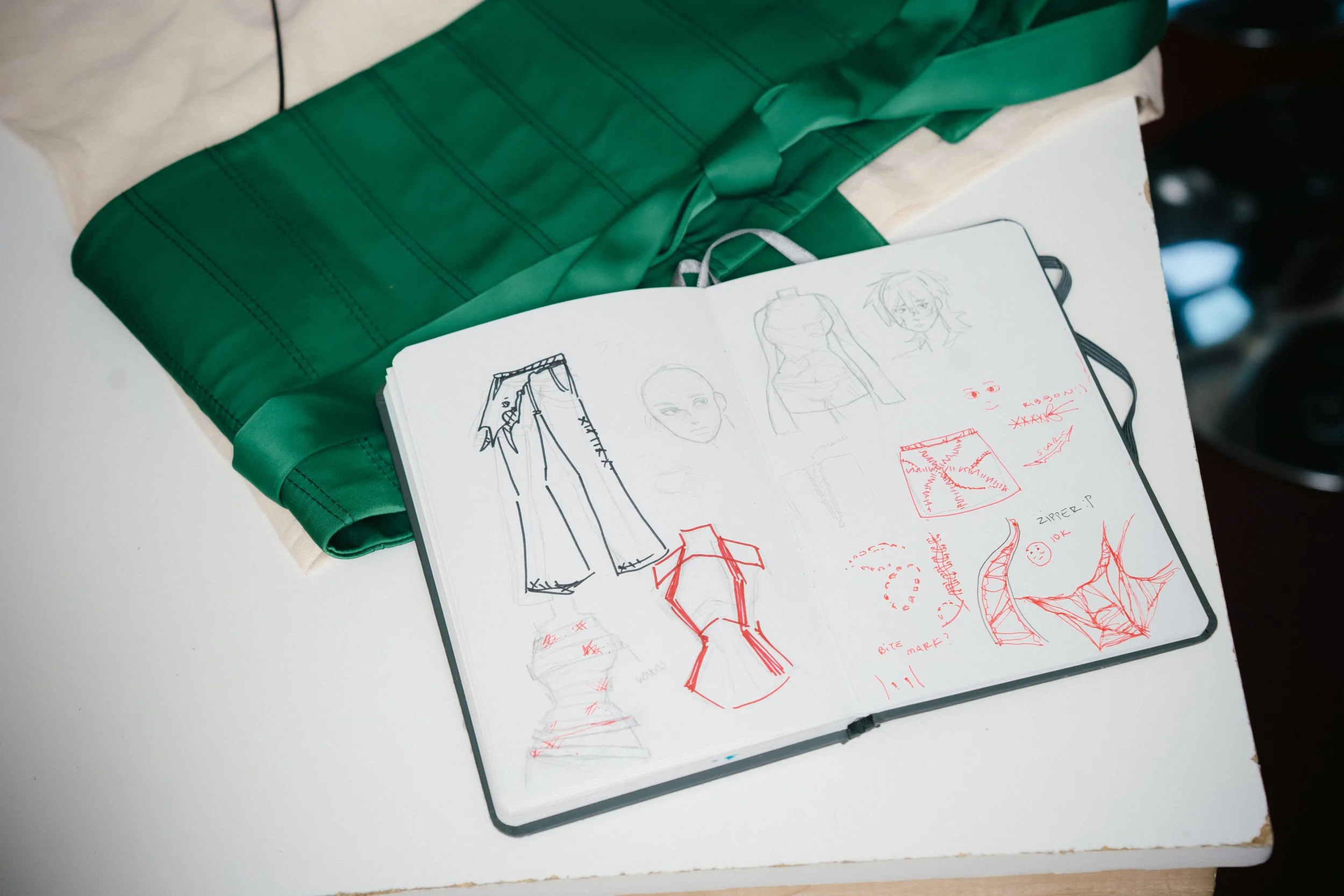
Step 3: Practice Consistent Constraints
Total freedom can feel exciting, yet boundaries often give a voice its shape. Think of how a coastline gives the Pacific its character.
Give your next project a frame:
Work with a limited colour palette across an entire collection or brand identity.
Design with one primary material, one shape, or one typographic family.
Communicate a single core emotion through every element of the project.
Within a frame, your choices become visible. Repeat them across projects and a pattern emerges, and that pattern is your voice taking form.
Step 4: Trust Your Intuition and Refine Over Time
Your design voice is a living thing. It grows with your skills, your travels, your heartbreaks, and your joys. The goal is a visual logic and a storytelling approach that feels unmistakably yours, one that can carry you through a lifetime of evolving work, rather than a single style fixed forever.
Return to that student with the green silk. By the end of her program, that fragment of colour had become the thread running through her graduating collection: muted greens, hand-finished edges, silhouettes that moved like rainfall. No one told her to design that way. She trusted what she kept noticing, gave it constraints, welcomed her imperfect drafts, and refined it until it became hers.
Your version of that silk is already out there, and you may have already picked it up.
Your Voice Deserves a Studio
Ready to turn your creative vision into a professional career? At The Cut Design Academy, our programs in Fashion, Interior, and Graphic Design are built to help you master technical craftsmanship while you cultivate your distinct artistic voice. Explore our upcoming programs and take the next step in your creative journey.
Contact Admissions@thecutdesignacademy.com for more information.