
What Skills Do Graphic Designers Need to Succeed in Today’s Creative Industry?
Graphic design is no longer limited to posters and logos.
It sits at the intersection of branding, digital communication, technology, and business strategy.
In today’s competitive creative landscape, employers and clients are not simply looking for someone who can “make things look good.” They are looking for designers who can think, structure, and communicate visually with purpose.
Here are the essential skills every aspiring graphic designer must develop.
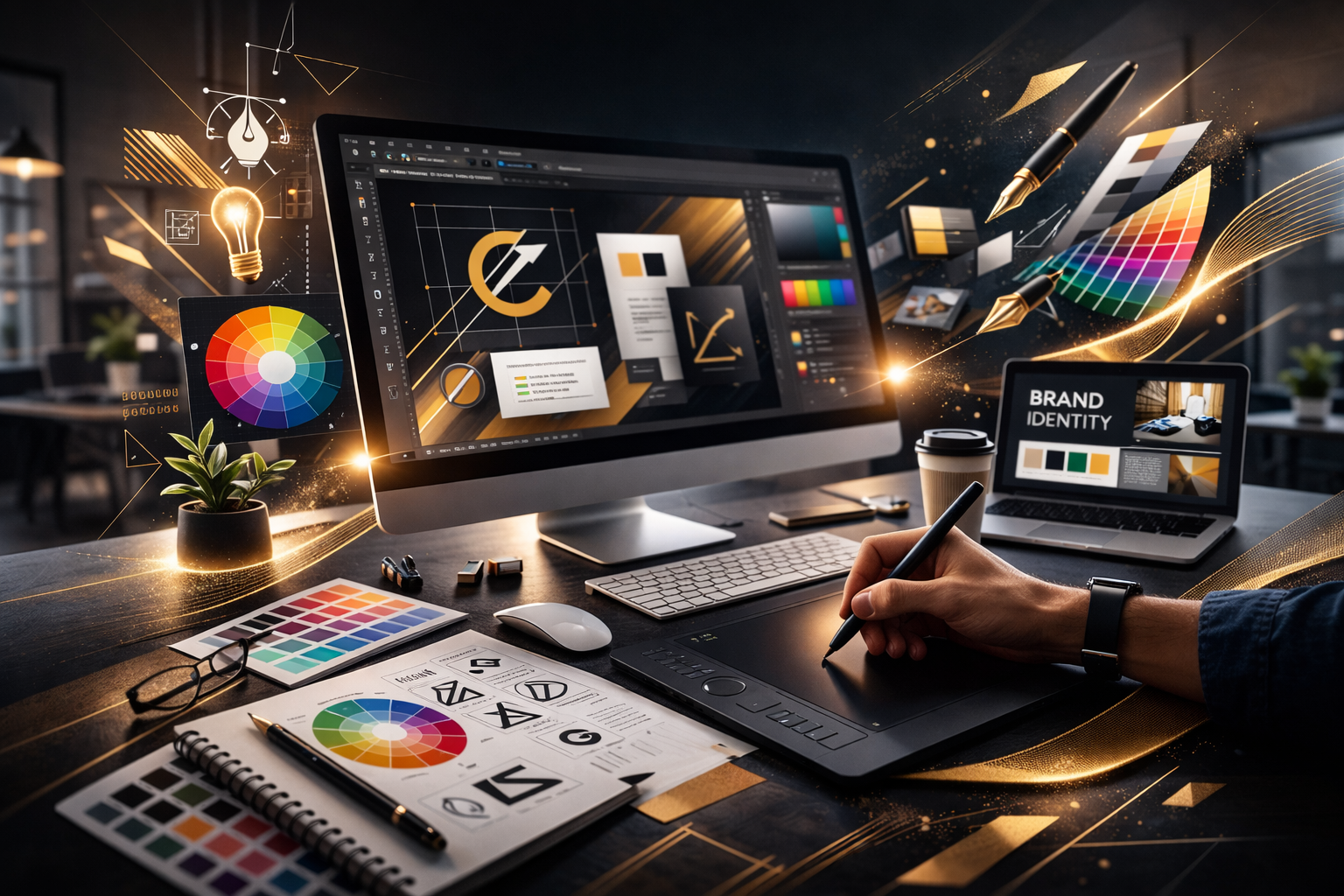
1. Strong Design Foundations
Before mastering software, designers must master principles.
Typography
Understanding font psychology, hierarchy, spacing, legibility, and pairing is fundamental. Typography is often the difference between amateur and professional work.
Color Theory
Designers must understand how colour communicates emotion, builds brand identity, and creates contrast and balance.
Layout & Composition
Grids, alignment, white space, proportion, and balance guide the viewer’s eye and create clarity.
Visual Hierarchy
A strong design communicates instantly. The viewer should know what to read first, second, and third within seconds.
These fundamentals remain constant, regardless of trends or technology.
2. Professional Software Mastery
Creative thinking must be supported by technical precision.
Professional designers are expected to confidently use industry tools such as:
Adobe Illustrator for logos and scalable vector artwork
Adobe Photoshop for photo manipulation and digital graphics
Adobe InDesign for editorial and layout design
Beyond software familiarity, students must understand:
File formats (SVG, EPS, PDF, PNG, print vs. web exports)
Resolution and DPI
Bleed, margins, and print production standards
Digital optimization for screens and mobile devices
Technical accuracy ensures creative ideas translate seamlessly into professional outcomes.